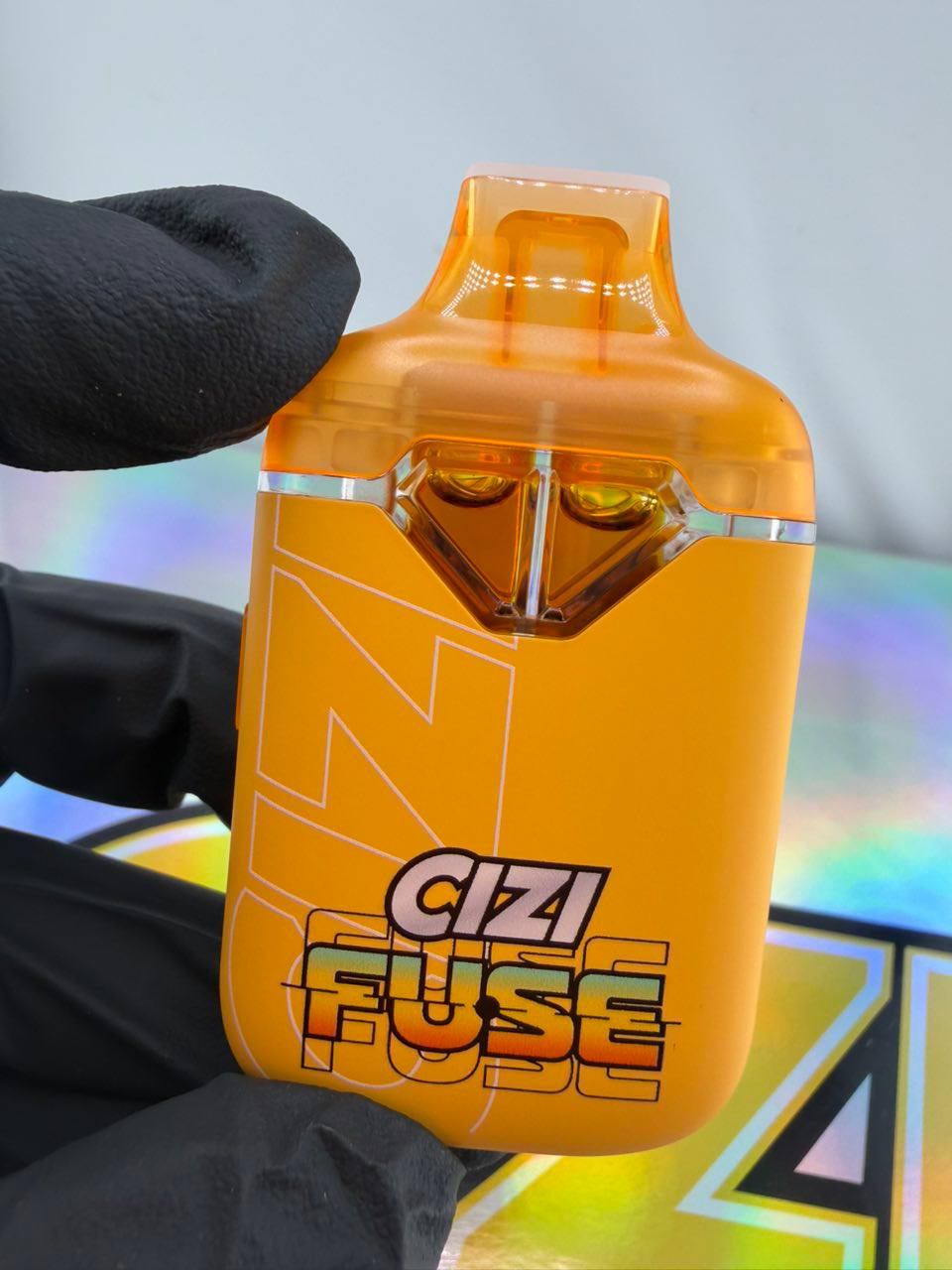
Cizi Fuse 2G Disposable: Product Information
Product Overview
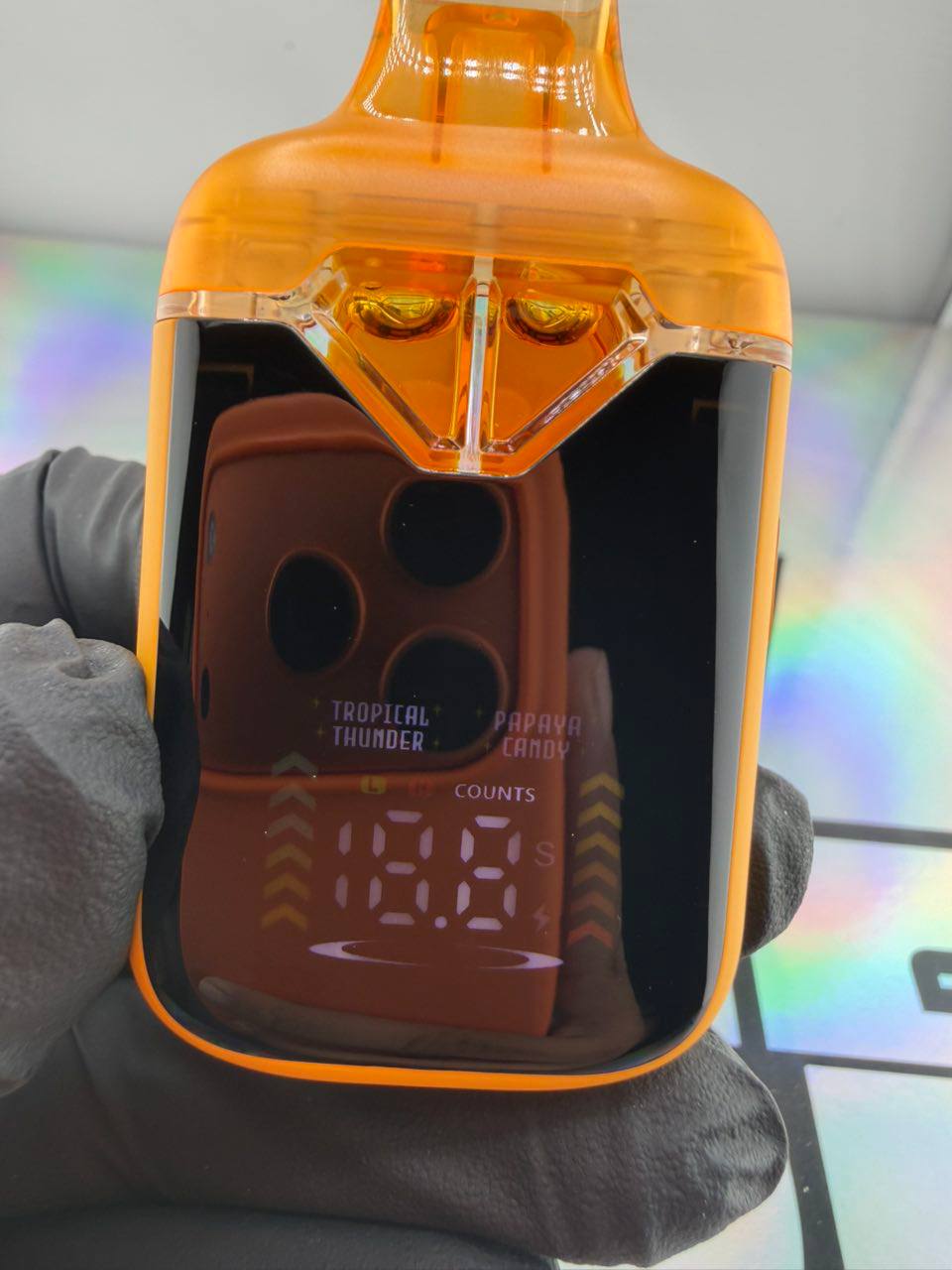
The Cizi Fuse 2G Disposable is a compact disposable vaporizer designed around a 2-gram oil capacity. Its disposable format combines the vaporizer hardware and pre-filled oil in a single unit, so there is no separate cartridge or external battery included as part of the standard design.
The device is intended to provide a portable format for adult consumers where such products are legally available. Product specifications, ingredients, cannabinoid content, and available flavors can vary by market and production batch.
Design and Format
The disposable design keeps the hardware relatively simple. A pre-filled reservoir contains the oil, while an integrated battery supplies power to the heating element. Because the components are contained within one device, the format differs from rechargeable vape systems that use replaceable cartridges.
The 2-gram designation refers to the stated oil capacity. Actual usable output can vary depending on the formulation, hardware, temperature, and individual device characteristics.
Hardware
The device incorporates several basic components commonly found in disposable vaporizers. These include an oil reservoir, heating element, battery, airflow system, and mouthpiece.
Depending on the specific Cizi Fuse production version, hardware details may differ. Therefore, information printed on the packaging should be treated as the primary reference for specifications such as battery type, oil volume, ingredients, and cannabinoid concentration.
Oil Capacity
A 2-gram capacity places the device in a larger format than many traditional 0.5-gram or 1-gram disposable products. However, capacity alone does not determine vapor output, potency, or the number of sessions a device may provide.
Usage duration can vary considerably. Factors such as inhalation length, frequency of use, oil viscosity, heating characteristics, and storage conditions can all affect how quickly the contents are consumed.
Flavor Information
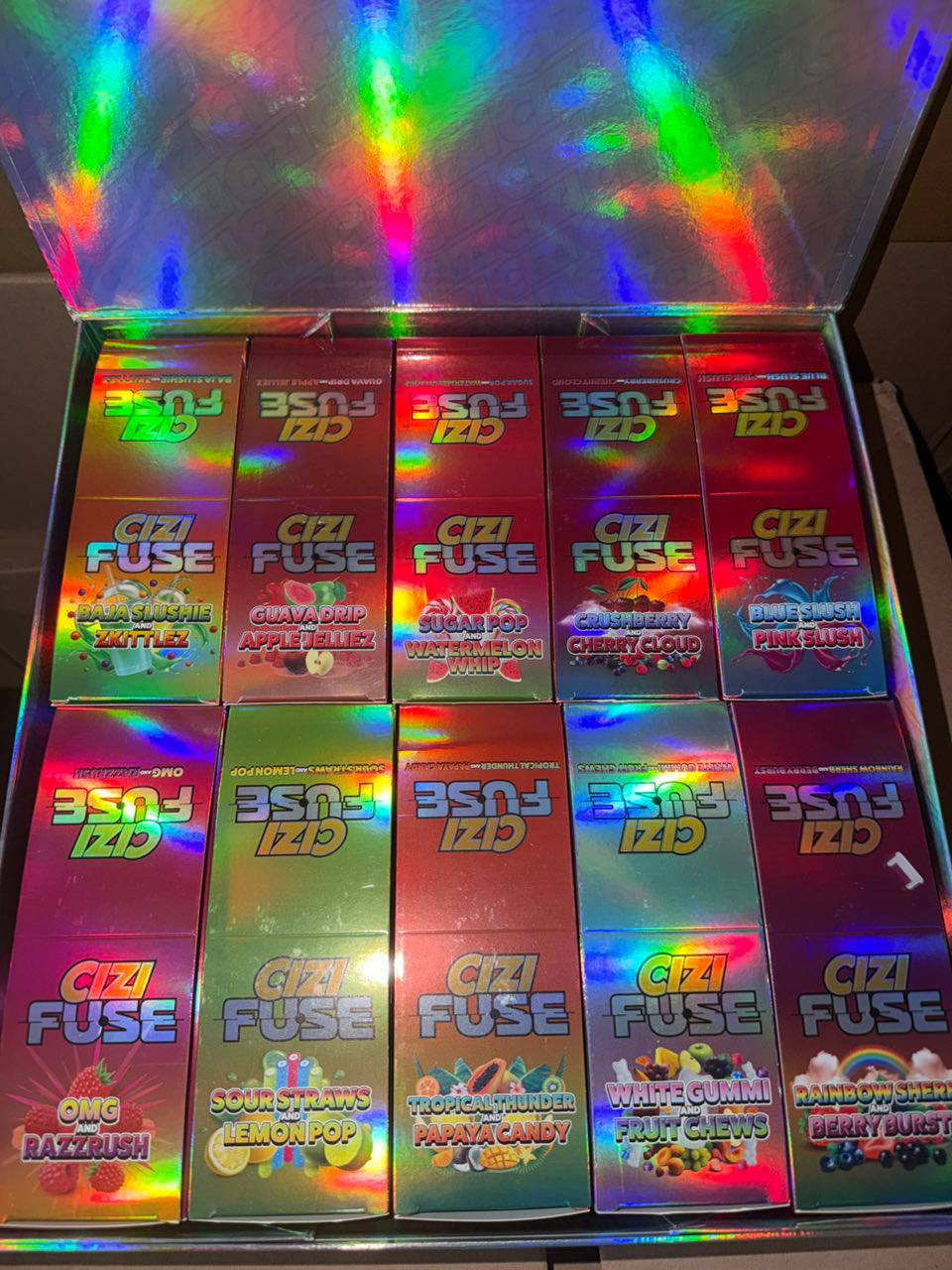
Flavor availability depends on the particular Cizi Fuse product line and market. Different versions may contain different terpene or flavor profiles.
Flavor descriptions should be based on the manufacturer’s packaging or verified product information rather than assumptions based solely on a product name. Similarly, cannabinoid and terpene claims should be checked against the applicable package labeling or laboratory documentation.
Product Labeling
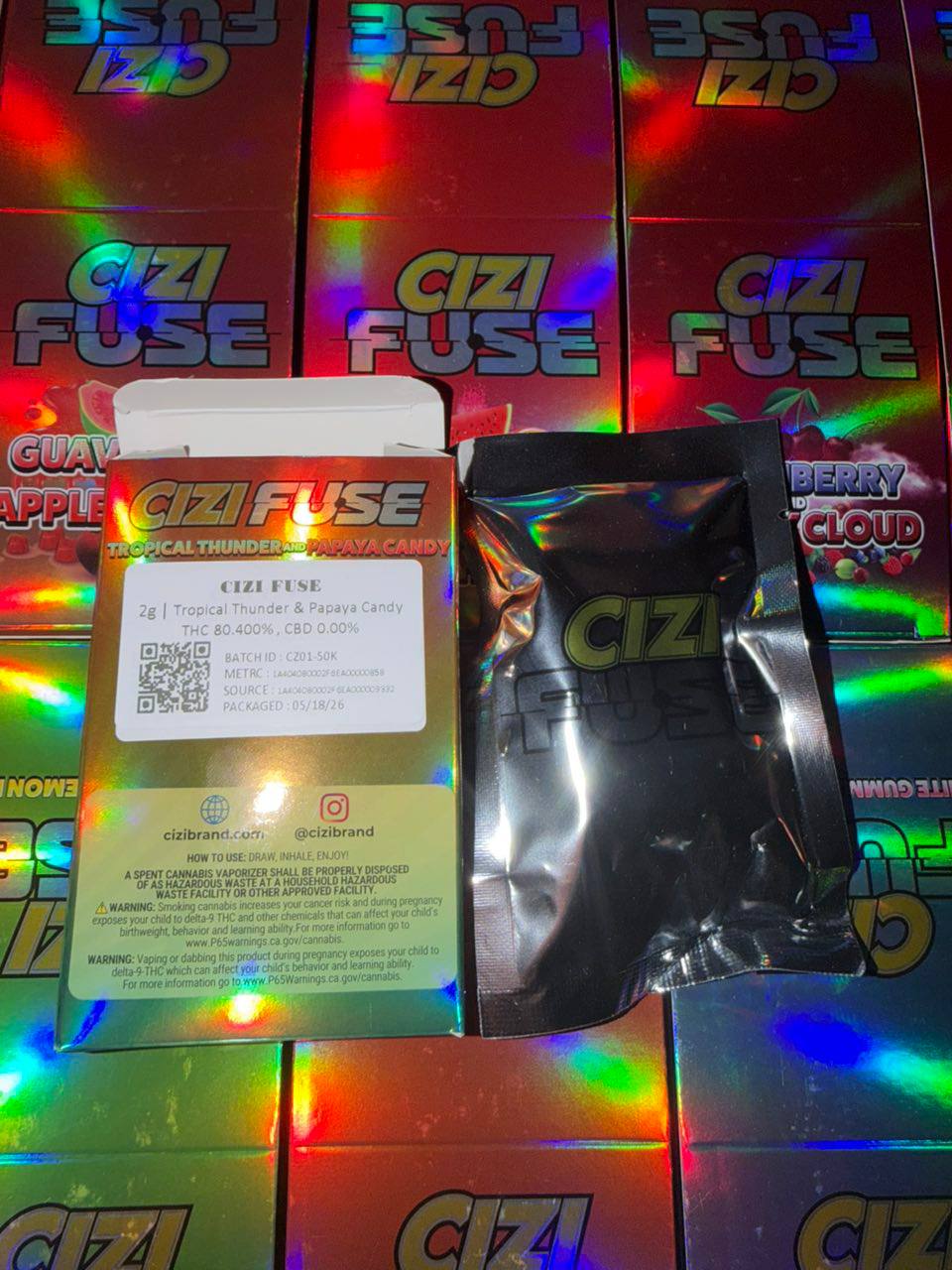
Accurate labeling is particularly important for cannabinoid-containing products. Packaging may identify the total cannabinoid content, ingredients, batch information, manufacturing details, and applicable warnings.
Where laboratory testing is provided, the certificate of analysis can offer additional information about cannabinoid concentrations and contaminant testing. The exact documentation available varies according to the manufacturer and jurisdiction.
Disposable Construction
Unlike refillable vaporizer systems, a disposable device is generally supplied as a complete unit. The reservoir and heating hardware are not intended to function as a reusable cartridge system.
This construction creates a straightforward product format, while also meaning that the entire device eventually requires appropriate disposal once its contents or battery are depleted.
Portability
The compact form factor is one of the defining characteristics of disposable vaporizer products. A single integrated unit can occupy less space than a separate battery-and-cartridge setup.
Nevertheless, portability does not remove the need for responsible storage. The device should be kept according to the manufacturer’s storage instructions and applicable safety information.
Storage Considerations
Storage conditions can influence the condition of vaporizer hardware and oil. Excessive heat, direct sunlight, moisture, and extreme temperature changes may affect the product.
For this reason, manufacturer-provided storage guidance remains the most appropriate source for handling information. Packaging should also remain available for reference because it may contain important warnings and product details.
Product Quality
Quality assessment should rely on verifiable information rather than appearance alone. Packaging, labeling, batch identification, testing documentation, and manufacturer information can provide useful indicators when evaluating a regulated product.
A professional product listing should avoid unsupported claims about purity, potency, effects, or performance. Instead, measurable specifications should be presented clearly and separately from subjective descriptions.
Safety and Compliance
Cannabinoid-containing disposable products are subject to different rules depending on location. Legal age requirements, possession limits, testing requirements, packaging standards, and permitted cannabinoid concentrations can vary substantially.
Consumers should therefore verify the laws applicable in their jurisdiction. Products should also remain away from children and pets, and the manufacturer’s safety warnings should be followed.
Packaging Information
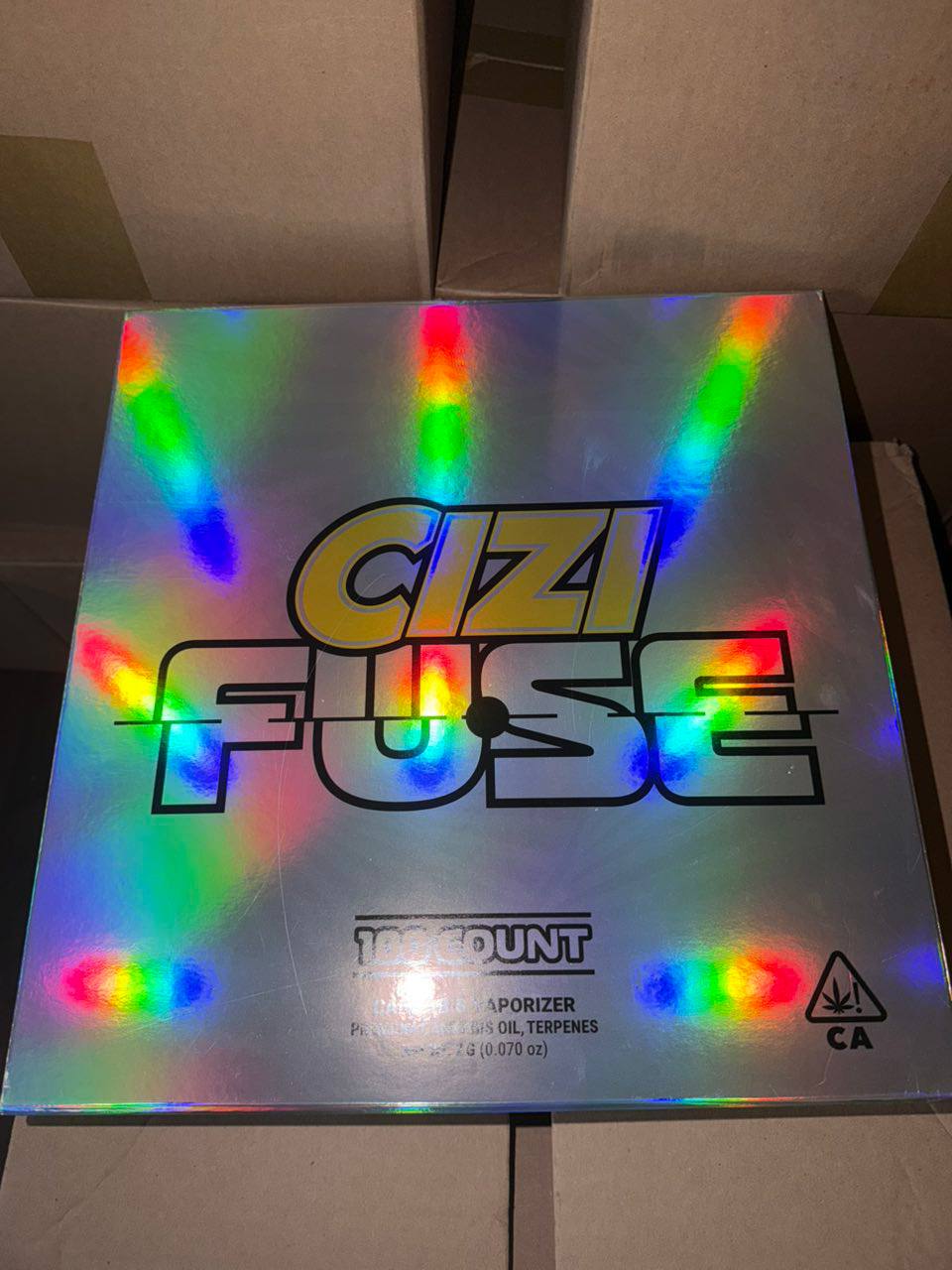
The packaging can provide important information that may not be visible on the device itself. Typical details can include the product name, stated capacity, ingredient information, cannabinoid content, batch number, manufacturer information, warnings, and testing details.
Because formulations and packaging can change, the specific package associated with a product should be used when verifying its current specifications.
What Makes the Format Different
The main distinction of a 2-gram disposable is its combination of relatively high stated oil capacity and integrated hardware. Traditional cartridges normally require a compatible battery, whereas a disposable combines these components into one product.
This difference affects the overall product format, storage requirements, and end-of-life disposal process.
Product Specifications
Responsible Product Information
Clear product descriptions should distinguish verified specifications from general observations. Statements about capacity, hardware, ingredients, and cannabinoid content should come from reliable product documentation.
Likewise, claims concerning effects or health benefits should not be presented as established product characteristics without appropriate evidence. A factual description gives readers a clearer understanding of what the product is without overstating its performance.
The Cizi Fuse 2G Disposable is a pre-filled disposable vaporizer built around a stated 2-gram oil capacity. Its integrated construction combines the reservoir, heating system, battery, airflow components, and mouthpiece into a single device.
Specific characteristics can vary between versions, flavors, batches, and markets. Therefore, the packaging and manufacturer documentation remain the best sources for current specifications, cannabinoid information, ingredients, testing details, and safety instructions.
For product listings, accurate specifications and transparent labeling provide a more reliable foundation than unsupported performance or health claims. This approach also makes the product information easier to read while keeping factual details separate from subjective marketing language.
Additional Product Information
Understanding the 2G Format
The 2-gram format describes the stated amount of oil contained within the device. This measurement refers to product capacity rather than a guaranteed number of uses, draws, or sessions.
Several factors can influence how long a device lasts. The formulation, heating system, airflow, inhalation pattern, and frequency of use may all affect consumption. Consequently, two devices with the same stated capacity may not provide identical usage duration.
The capacity should therefore be viewed as a product specification rather than a promise of performance.
Integrated Battery System
A disposable vaporizer typically contains its own battery rather than requiring a separate power source. The battery supplies energy to the heating element when the device is activated.
The exact battery specifications for a particular version should be confirmed through its packaging or manufacturer documentation. Features such as charging capability can differ between models, even when products have similar external designs.
This distinction is important because some disposable devices are designed for single-use operation, while others may incorporate rechargeable hardware.
Heating Technology
The heating element is responsible for converting the oil into an inhalable aerosol. Its performance depends on the device’s internal construction and the characteristics of the oil formulation.
Temperature, airflow, coil construction, and oil viscosity can influence the resulting vapor. However, these characteristics should not be assumed unless they have been confirmed by the manufacturer.
A reliable product description therefore focuses on documented hardware information rather than making technical claims that cannot be verified.
Airflow Design
Airflow is another component of disposable vaporizer construction. Air enters through designated openings and passes through the device before reaching the mouthpiece.
The design of those openings can vary between products. Some devices use fixed airflow, while others may incorporate adjustable mechanisms.
The specific configuration of a Cizi Fuse unit should be confirmed from the physical product or official documentation because manufacturing versions may differ.
Mouthpiece Construction
The mouthpiece forms the connection between the internal airflow path and the user. Its dimensions and shape can vary depending on the hardware design.
Material specifications are not always included in general product listings. Therefore, descriptions should avoid identifying a particular material unless it has been confirmed through reliable documentation.
Keeping this information factual helps prevent inaccurate claims about construction or performance.
Oil and Ingredient Information
Oil formulations can contain cannabinoids, terpenes, carrier ingredients, or other components depending on the product and applicable regulations.
The complete ingredient profile should be taken from the product label or manufacturer documentation. A product name alone does not provide enough information to determine the exact formulation.
Laboratory documentation may also provide additional information regarding cannabinoid concentrations and testing results. Where such documentation is available, it can be used to verify claims made on the packaging.
Cannabinoid Content
Cannabinoid concentration is separate from total oil capacity. A device may contain 2 grams of oil, but the amount and concentration of individual cannabinoids depend on the formulation.
For that reason, capacity should not be interpreted as a specific cannabinoid quantity.
Current labeling is the appropriate reference for cannabinoid information. Values can also differ between batches, jurisdictions, and product versions.
Terpene Information
Terpenes are naturally occurring aromatic compounds found in many plants. In cannabinoid products, they may originate from the source material or be included as part of the formulation.
The presence and concentration of specific terpenes should not be inferred from a flavor name alone. Verified laboratory results or manufacturer documentation provide a more reliable basis for describing the terpene profile.
Batch Identification
Batch numbers are useful for product traceability. They can connect a particular unit or package to manufacturing and testing records.
When available, the batch identifier can be compared with laboratory documentation supplied by the manufacturer or authorized distributor.
This information can also help distinguish different production runs when specifications have changed over time.
Authenticity Considerations
Product authenticity is an important consideration for packaged cannabinoid products. Packaging quality, labeling consistency, batch information, manufacturer details, and available verification systems may provide useful indicators.
A product listing should not guarantee authenticity without a reliable verification method. Instead, factual information about available verification features can be provided when those features are documented.
Differences Between Product Versions
Product names can sometimes remain consistent while hardware, packaging, flavor selections, or formulation details change.
For this reason, an older product description should not automatically be treated as accurate for a newer production batch.
Current packaging provides the strongest reference for identifying the specific version. This is especially relevant when a listing contains information about capacity, battery features, or cannabinoid concentration.
Storage and Product Condition
Environmental conditions can influence disposable vaporizer hardware. Heat exposure may affect oil consistency, while prolonged exposure to direct sunlight can affect the product and packaging.
A cool, dry storage environment is generally preferred for many oil-based products, although the manufacturer’s stated storage requirements should take priority.
The device should also remain in its original packaging when appropriate, particularly when the package contains safety information or batch identification.
Disposal
Disposable vaporizers contain electronic components and batteries. Consequently, they should not automatically be treated like ordinary household waste.
Local disposal requirements can vary. Appropriate electronic-waste or battery-disposal options may be available depending on the jurisdiction.
The manufacturer’s disposal instructions and local regulations provide the most accurate guidance for handling a depleted device.
Product Listing Accuracy
A strong product listing separates confirmed specifications from general product observations.
For example, a stated 2-gram capacity can be presented as a specification when supported by the packaging. In contrast, claims about exact usage duration should not be presented as guaranteed because individual consumption varies.
The same principle applies to flavor, hardware, potency, and performance descriptions.
Neutral Description Standards
Clear language improves the usefulness of product information. Short paragraphs and descriptive headings make technical details easier to locate.
At the same time, unnecessary repetition can make a listing feel artificial. Product descriptions benefit from naturally varied sentence structures and straightforward explanations.
Verified specifications should remain the foundation of the description, while unsupported claims should be excluded.
Frequently Asked Questions
What does 2G mean?
The 2G designation generally refers to the stated amount of oil contained in the device. It does not guarantee a specific number of draws or a particular duration of use.
Is the device rechargeable?
Rechargeability depends on the specific hardware version. The packaging or manufacturer’s documentation should be checked for confirmation.
Does the flavor determine the cannabinoid content?
No. Flavor names do not independently establish cannabinoid concentration. Cannabinoid information should be taken from the product label or verified testing documentation.
Can different batches have different specifications?
Yes. Product formulations, packaging, and hardware can change between production runs. Current labeling is therefore more reliable than older descriptions.
Where can product information be verified?
Manufacturer documentation, packaging, laboratory reports, and applicable regulatory information can provide useful verification.
How should the device be stored?
Storage requirements should follow the manufacturer’s instructions. Protection from excessive heat, direct sunlight, and unsuitable environmental conditions may help preserve product condition.
Information Transparency
Transparency is particularly valuable when describing regulated products. Readers benefit from knowing which details represent documented specifications and which details may vary.
A factual listing can therefore explain the product’s format, capacity, construction, and labeling without making claims that cannot be independently supported.
This approach also makes the content more useful for readers comparing different product formats.
The Cizi Fuse 2G Disposable represents a disposable vaporizer format with a stated 2-gram oil capacity and integrated hardware. The device combines multiple components into a single unit, including an oil reservoir, heating system, battery, airflow path, and mouthpiece.
Exact specifications can depend on the particular production version and market. As a result, current packaging and manufacturer documentation should remain the primary references for cannabinoid content, ingredients, hardware features, testing information, and safety details.
A clear product description focuses on those verifiable characteristics while avoiding assumptions about performance, effects, or duration. This creates useful information that remains readable, organized, and transparent.
Cizi Fuse 2G Disposable: Detailed Product Guide
Product Format and Everyday Design
The Cizi Fuse 2G Disposable belongs to the all-in-one vaporizer category. Its design combines the primary hardware components into one compact unit rather than separating the battery from a replaceable cartridge.
This type of construction can make the overall product simpler in physical design. The oil reservoir, heating mechanism, airflow path, battery, and mouthpiece are contained within the same device.
The stated 2-gram capacity identifies the amount of oil associated with the product. It does not indicate a guaranteed number of inhalations, because consumption varies according to individual use and hardware characteristics.
Compact Hardware Configuration
Disposable vaporizers generally prioritize a compact configuration. Instead of requiring a separate battery and cartridge, the complete system is assembled as one product.
The exterior may include a body section, mouthpiece, airflow openings, and other hardware indicators. Internal components are not normally visible during ordinary use.
Because hardware can change between manufacturing runs, specific technical details should be confirmed against the packaging associated with the individual product.
Oil Reservoir
The reservoir stores the product formulation before it reaches the heating element. Its capacity is represented by the stated 2-gram specification.
Oil consistency can vary according to its formulation and temperature. Consequently, storage conditions may influence how the contents behave inside the reservoir.
The reservoir itself should not be treated as refillable unless the manufacturer specifically identifies the device as refillable. Disposable hardware generally has a different construction from reusable cartridge systems.
Heating Component
The heating component converts the oil into an aerosol. This process occurs inside the device and is controlled by the hardware’s internal electrical system.
Different vaporizer designs can use different heating technologies and coil configurations. Unless the manufacturer provides detailed technical information, a product description should avoid assigning a particular coil type or heating method.
This distinction helps keep product specifications accurate rather than relying on assumptions based on the appearance of the device.
Airflow Path
Airflow provides the route through which air moves through the device. The internal pathway connects the exterior air intake with the mouthpiece.
The size and placement of airflow openings can influence the physical characteristics of the device. However, exact airflow performance cannot be established from product capacity alone.
Manufacturing specifications are the most appropriate source for details involving airflow design.
Battery Configuration
An integrated battery supplies power to the heating system. The battery is contained within the disposable housing rather than being provided as a separate external component.
Whether a particular version includes a charging port depends on the hardware configuration. Some disposable products are designed with rechargeable batteries, while others are intended to be discarded after the battery is depleted.
The packaging should therefore be checked before making a specific statement about charging.
Charging Information
If a particular unit includes rechargeable hardware, its charging instructions should come from the manufacturer. Charging specifications can include information about compatible equipment, charging duration, and safety precautions.
A device without a charging function should not be connected to an external power source.
For this reason, product listings should identify charging features only when they have been verified for the exact model.
Flavor and Formulation Variations
Different versions of a product may be associated with different flavor names or formulations. Those names can describe an intended aromatic profile, but they do not independently establish the chemical composition.
Flavor availability can also vary according to market and production period.
A detailed listing can therefore describe verified flavor information while avoiding assumptions about ingredients or cannabinoid concentrations.
Packaging as a Source of Information
The package is often the most practical place to find current product details. Information can include the product name, capacity, ingredients, cannabinoid content, batch identification, warnings, and manufacturer information.
Packaging can change over time, so older photographs or previous listings may not accurately represent a current version.
Current labeling should take priority whenever specifications appear to differ.
Laboratory Testing
Laboratory testing can provide additional information about the contents of regulated cannabinoid products. Depending on the jurisdiction and manufacturer, testing may address cannabinoid concentrations and certain contaminants.
A certificate of analysis can be useful when it corresponds directly to the relevant batch.
Testing information should not be assumed to apply to every production run. The batch or lot identifier can help establish whether a laboratory document corresponds to a particular product.
Cannabinoid Concentration Versus Capacity
Capacity and cannabinoid concentration describe different characteristics.
The 2-gram figure concerns the stated quantity of oil. Cannabinoid concentration describes the amount or percentage of particular cannabinoids within that formulation.
Therefore, the capacity number alone cannot establish potency.
A factual product page should keep these measurements separate. This makes the specifications easier to understand and reduces the risk of misleading interpretations.
Product Identification
Accurate identification can be important when several products have similar names or packaging.
Useful identifying details may include:
- Product name
- Product version
- Stated capacity
- Flavor or formulation
- Batch number
- Manufacturer
- Packaging date where provided
- Verification information
These details can help distinguish one production version from another.
Responsible Storage
Appropriate storage can help maintain the condition of the device and its packaging. Temperature, light, moisture, and physical handling can all affect products containing oils and electronic components.
The manufacturer’s storage instructions should remain the primary reference.
The device should also be kept away from children and pets and stored in a location consistent with applicable safety requirements.
Physical Handling
A disposable vaporizer contains electronic components and a battery. As a result, it should be handled as an electronic product rather than an ordinary container.
Damage to the housing, battery, or other components can affect the physical condition of the device.
Product information should therefore include manufacturer warnings where applicable, particularly when those warnings concern battery safety or damaged hardware.
Product Longevity
The amount of time a disposable device remains usable varies between individuals.
Factors that can influence consumption include frequency of use, inhalation duration, airflow characteristics, oil formulation, and battery performance.
Consequently, the 2-gram specification should not be converted into a guaranteed number of sessions or days.
Differences From Cartridge Systems
A disposable device differs from a cartridge-based system primarily through its integrated construction.
A conventional cartridge normally connects to a compatible battery. A disposable combines the cartridge and battery functions within a single housing.
This can reduce the number of separate components involved, while also creating different considerations for charging, storage, and disposal.
Differences From Refillable Vaporizers
Refillable systems are designed around reusable hardware and replaceable or refillable oil reservoirs. Disposable systems generally use a pre-filled reservoir that remains integrated with the device.
The two formats therefore serve different hardware purposes.
The disposable format focuses on a self-contained design, whereas refillable systems typically involve additional maintenance and component replacement.
Quality Verification
Visual appearance alone cannot establish product quality or authenticity.
More useful indicators include consistent packaging, clear labeling, batch information, manufacturer identification, and relevant laboratory documentation.
Where a verification system is supplied, its information can provide additional context. However, unsupported claims about authenticity should be avoided.
Product Information for Online Listings
An informative online listing benefits from clearly separated sections.
The product name and capacity can appear near the beginning, while detailed information about hardware, formulation, packaging, and testing can follow.
This structure allows readers to find specifications without forcing the same phrase repeatedly throughout the description.
Natural language also makes technical information easier to understand.
Avoiding Unsupported Claims
A responsible description should avoid statements that cannot be verified.
For example, exact claims about duration, effects, purity, potency, or performance should not be presented as established facts without supporting evidence.
Instead, measurable information can be stated directly. Capacity, dimensions, ingredients, cannabinoid information, and hardware specifications can be included when they are documented.
Product Information Checklist
A complete listing can cover the following areas:
Basic information: product name, format, and stated capacity.
Hardware: integrated battery, reservoir, heating component, airflow system, and mouthpiece.
Formulation: ingredients, cannabinoid information, and verified flavor details.
Testing: laboratory information and corresponding batch identification.
Packaging: labeling, warnings, manufacturer details, and verification features.
Storage: applicable manufacturer recommendations.
Disposal: appropriate handling of electronic and battery components.
Frequently Asked Questions
What is the stated capacity?
The product is identified as having a 2-gram capacity. This figure represents the stated oil quantity and does not guarantee a specific number of uses.
Is it a cartridge or a complete device?
The product is presented as a disposable device rather than a standalone cartridge. Its primary components are integrated into one housing.
Can the formulation vary?
Yes. Formulations can differ between flavors, production batches, markets, and product versions. Current packaging provides the most reliable information.
Does the 2-gram figure indicate potency?
No. Capacity and potency are separate measurements. Cannabinoid information must be obtained from the relevant labeling or testing documentation.
Why is batch information important?
Batch information can help connect a particular product to manufacturing and laboratory records where those records are available.
Can the device be recycled?
Disposal requirements depend on local regulations and available electronic-waste facilities. Because the device contains a battery and electronic components, local guidance should be followed.
Final Product Perspective
The Cizi Fuse 2G Disposable is characterized by its stated 2-gram capacity and integrated disposable format. Its design brings together the reservoir, heating system, battery, airflow path, and mouthpiece within a single unit.
The exact characteristics of an individual product can depend on its production version and market. For that reason, current packaging and manufacturer documentation remain essential when verifying specifications.
A well-structured product description can provide useful information about capacity, construction, labeling, testing, storage, and disposal without relying on exaggerated performance claims.
This factual approach keeps the information clear while allowing readers to distinguish documented specifications from characteristics that may vary between products.

Reviews
There are no reviews yet.